A.C.O.
A.C.O. were Natura Aranas Furrbacks that lived in ancient times and are considered the common origin of all other Arana species.
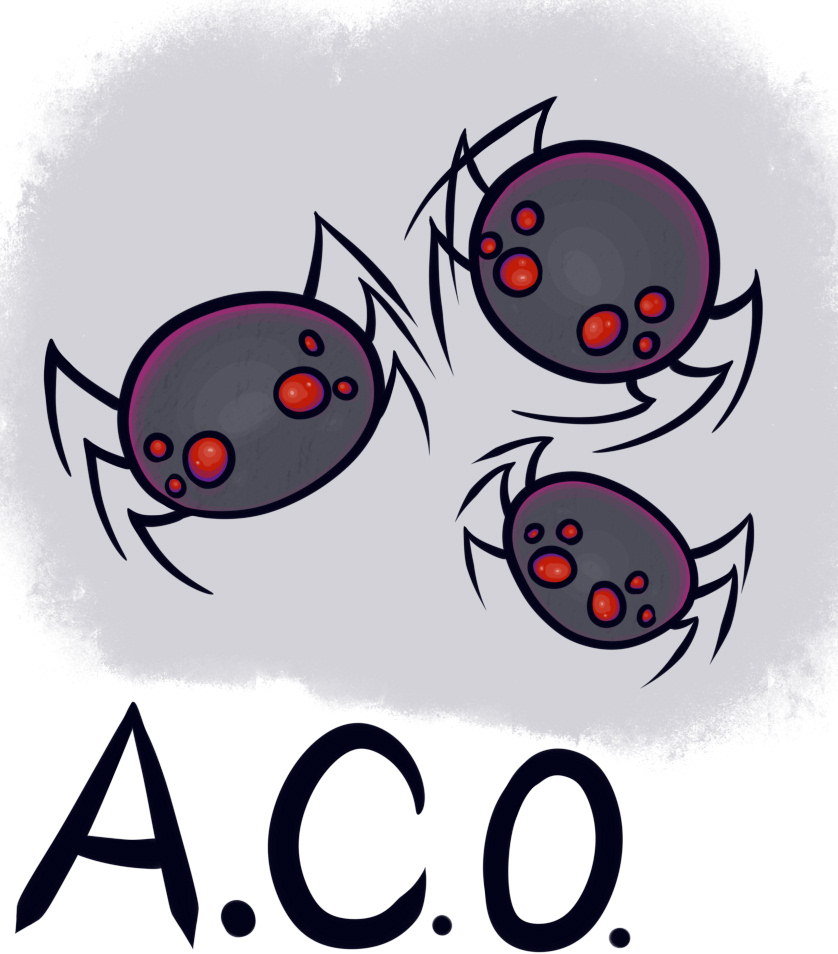
A.C.O. were small, simple creatures with a round, black, furry body, six red eyes, and six thin black legs extending from their sides.
A.C.O. (Arana’s Common Origin) were, as their name implies, the first Aranas from which all other Arana species descended. They originated in the Acela region, where they lived among tree branches and relied on concealment to avoid danger. Over time, a series of highly disruptive events —including severe meteorological disasters, tornados, and The Coma— caused the species to disperse across the world. Isolated populations subsequently evolved independently, giving rise to the many Arana species known today.
It is believed that a large portion of A.C.O. lived on the great tree upon which the Oide Kingdom is now located. This structure was one of the few that survived long enough to persist through multiple stages of The Coma. However, while it endured structurally, it did not provide sufficient protection to fully shield the species from the catastrophic events that followed.
A.C.O. could spit webbing from their rear that adhered to surfaces with great strength. They used this webbing primarily for mobility and to construct various structures, such as nets for storing food and small web bags used as hideouts. These web bags served both as resting places and as protection from external threats. It is believed that A.C.O. used these structures to shelter themselves during the disruptive events, aiding their survival through the scattering and widespread destruction.
A.C.O. were omnivorous, consuming a wide range of materials including fruits, nuts, and carrion. They gathered food using their mouths, gripping and breaking it into smaller pieces with their small fangs before transporting it to their hideouts.
On rare occasions, A.C.O. constructed large webs capable of trapping small creatures. If a captured organism was unable to escape, it would eventually perish within the web. The A.C.O. would then enter the prey’s body through its orifices and begin consuming its flesh from the inside outward.
A.C.O. reproduced by laying large numbers of eggs. Each egg was wrapped in a protective layer of webbing, which helped regulate temperature and reduced the risk of breakage. During hatching, the developing A.C.O.’s fangs and legs were the first parts to emerge, assisting in breaking through the shell.
A.C.O. were capable of rapidly regenerating lost legs, but only if the limb was missing from the base. If a leg was severely damaged, they would self-amputate it to initiate regeneration as quickly as possible.
The descendants of A.C.O. may or may not retain the full range of abilities possessed by their ancestral species, but all are considered undeniable descendants of A.C.O. In modern times, A.C.O. are believed to be extinct; however, their descendant variants continue to thrive in diverse forms across the world.
Branch: Natura
Category: Aranas
Subcategory: Furrbacks
Etymology: "Arana’s Common Origin"
Sex Ratio: 50% Male/50% Female
Sapience: ---